Hand Case 7 ED Management
Ring Entrapment
- Ring removal is the first priority for any injury with potential for digit swelling. If not removed, the finger will continue to swell until there is vascular compromise.
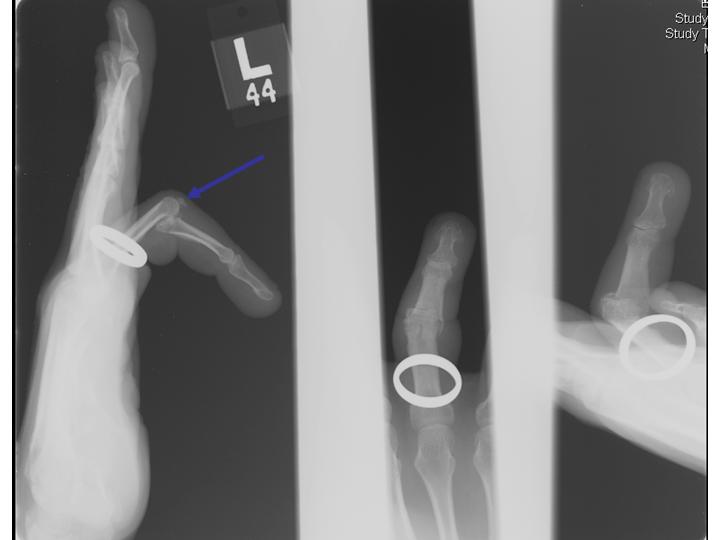
- Removal becomes more difficult as the finger swells over time, so removal should usually proceed prior to plain films.
- There is little concern for making an underlying injury worse from removal attempts since the traction applied in ring removal techniques is similar to traction applied for reducing fractures and dislocations.
- Initial management involves appropriate pain control. A digital block can be performed prior to ring removal for patient comfort.
Techniques for Removal:
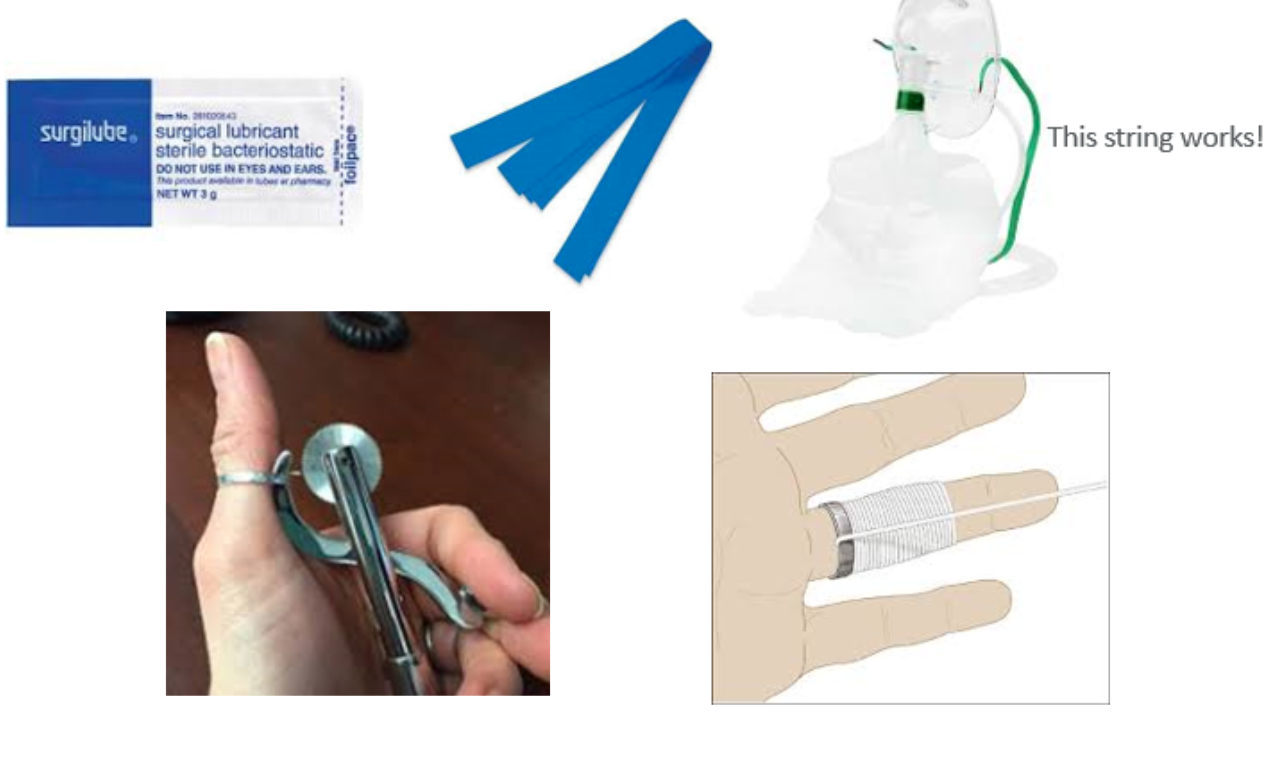
- Use lubricant to overcome surface tension. The soap from the wall dispenser can be used if lubricant is not readily available. Rotate the ring and apply steady traction. Patients can also try this themselves if it is less painful.
- String wrap method:
- Slide one end of a broad flat filament (a nonrebreather mask cord works well as it has a plastic cap that makes it easier to feed under the ring!) under the ring proximally. Avoid thin strings as this could result in lacerations to the patient's skin.
- Tightly wrap the string around the finger starting from just distal to the ring, overlapping the string as you are spiraling up past the PIP joint.
- Hold the end of the string that is under the ring and slowly pull the string distally, unwrapping the wrapped string as it advances the ring over the PIP joint.
3. Ring Cutter- Most Emergency Departments keep a dremel ring cutter device. Familiarize yourself with the equipment available in your department. Refer to the device's included instructions for use. Discuss with the patient that the ring will be destroyed beforehand.
- Place a metal guard underneath the ring to protect the patient's skin. This guard is part of many of the ring remover tools.
- Stop frequently to check for heat buildup when using an electric ring cutter to avoid burns.
- Select the circular blade
- For gold, silver, brass: standard hardness steel blade
- For titanium, platinum and tungsten: a diamond-coated blade or Dremel saw is needed to cut these extremely hard metals
- Make 1-2 cuts as needed to remove